

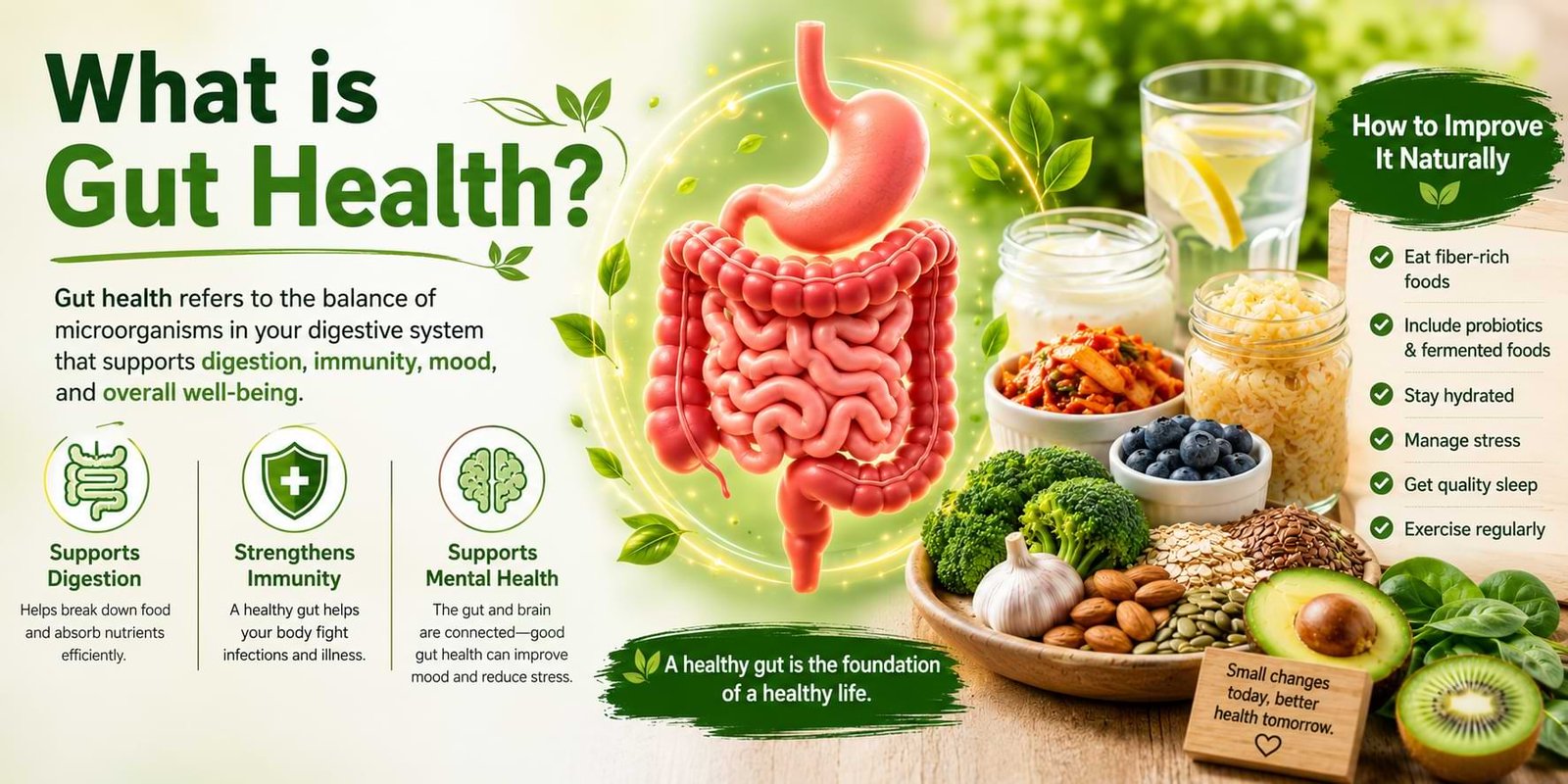
What Is Gut Health ?
Gut health refers to the balance of beneficial microorganisms living in your digestive system, collectively known as the gut microbiome. These microbes help digest food, absorb nutrients, and support immune function.
A healthy gut can also influence mood, sleep, energy levels, and overall well-being. Understanding what is gut health and how it affects your body is the first step toward better digestive wellness. To improve gut health naturally, focus on eating Gut Healthy foods, staying active, managing stress, and maintaining healthy lifestyle habits that support a balanced digestive system.
Benefits of a Healthy Gut
Better Digestion
A healthy gut helps your body digest food more efficiently. When you regularly consume Gut Healthy foods and probiotic foods for gut health, your digestive system can work more smoothly. This may help reduce bloating, gas, and digestive discomfort. Understanding what is gut health can help you make better dietary choices for long-term digestive support.
Stronger Immune System
Nearly 70% of the immune system is linked to the digestive tract. Eating fermented foods for gut health and including pre and probiotics in your diet may help support your body’s natural defenses. This is one reason why learning what is gut health is important for overall wellness.
Improved Energy Levels
When your gut functions properly, your body absorbs nutrients more effectively. This can help improve energy production and support daily activities. Many people choose Gut Health Supplements to complement a balanced diet and maintain digestive wellness.
Better Mental Well-Being
Scientists often refer to the relationship between the gut and the brain as the “gut-brain connection.” Research suggests that maintaining a healthy gut may positively influence mood and mental wellness. People researching what is gut health are often surprised to learn about this strong connection.
Healthy Weight Management
A balanced gut microbiome may help support healthy metabolism and appetite regulation. Combining Gut Healthy foods with regular exercise can contribute to long-term wellness goals.
Interesting Facts About Gut Health
Your Gut Contains Trillions of Microbes
The human digestive system contains trillions of microorganisms. These microbes help digest food, produce vitamins, and support immune function. Understanding what is gut health starts with understanding the role of these microbes.
Not All Bacteria Are Bad
Many beneficial bacteria are essential for good health. Probiotics for gut health are designed to increase these helpful bacteria in the digestive system.
Fermented Foods Have Been Used for Centuries
Fermented foods for gut health have been consumed around the world for hundreds of years. Foods such as yogurt, kefir, kimchi, and sauerkraut naturally contain beneficial bacteria.
Fiber Feeds Good Bacteria
Pre and probiotics work differently. Probiotics introduce beneficial bacteria, while prebiotics feed those bacteria. Foods rich in fiber are excellent sources of prebiotics and can help improve gut health naturally. This is another important aspect of what is gut health.
Signs of Poor Gut Health: Common Symptoms You Shouldn’t Ignore
Frequent bloating, constipation, diarrhea, excessive gas, food intolerances, fatigue, poor sleep, and skin issues may all indicate digestive imbalance. If you’re wondering what is gut health and whether yours is healthy, these symptoms can provide useful clues.
If you experience several of these symptoms regularly, consider adding more Gut Healthy foods, fermented foods for gut health, and sources of pre and probiotics to your daily diet.
Best Gut Healthy Foods
Eating a variety of Gut Healthy foods can support a diverse and balanced microbiome.
Some of the best options include:
- Yogurt – दही
- Kefir – केफिर
- Kimchi – किमची
- Sauerkraut – फर्मेंटेड पत्ता गोभी (सॉकरकॉट)
- Whole grains – साबुत अनाज
- Oats – ओट्स (जई)
- Bananas – केले
- Apples – सेब
- Garlic – लहसुन
- Onions – प्याज
- Leafy green vegetables – हरी पत्तेदार सब्जियां
- Beans and Lentils – राजमा, छोले और विभिन्न प्रकार की दालें
These probiotic foods for gut health and fiber-rich foods provide important nutrients that support digestive wellness. Including fermented foods for gut health regularly can help increase the diversity of beneficial bacteria in your digestive tract.
The Role of Probiotics and Supplements
Probiotics for gut health are beneficial bacteria that support a healthy digestive system. Common probiotic foods for gut health include yogurt, kefir, and fermented vegetables. Many people also use Gut Health Supplements to boost beneficial bacteria. If you’re researching what is gut health, probiotics are one of the most commonly recommended solutions.
Practical Tips to Improve Gut Health Naturally
Here are some simple ways to improve gut health:
- Eat more Gut Healthy foods every day.
- Include fermented foods for gut health several times each week.
- Add probiotic foods for gut health such as yogurt and kefir to your meals.
- Consume more fiber-rich fruits and vegetables.
- Stay hydrated.
- Exercise regularly.
- Manage stress through relaxation techniques.
- Get enough sleep.
- Consider Gut Health Supplements if recommended by a healthcare professional.
- Follow a gut reset meal plan to establish healthier eating habits.
When applying these strategies, remember that understanding what is gut health helps you make more informed choices.
3-Day Gut Reset Meal Plan for Vegetarians and Non-Vegetarians
Day 1
|
Meal |
Vegetarian Option |
Non-Vegetarian Option |
|
Breakfast |
Plain yogurt with berries
and oats |
Plain yogurt with berries
and oats |
|
Lunch |
Quinoa bowl with mixed greens, chickpeas, cucumber, and olive oil dressing |
Grilled chicken with mixed greens and quinoa |
|
Snack |
Apple slices |
Apple slices |
| Dinner |
Lentil curry with steamed vegetables and brown rice |
Salmon with steamed vegetables and brown rice |
Day 2
|
Meal |
Vegetarian Option | Non-Vegetarian Option |
|
Breakfast |
Oatmeal with banana and chia seeds |
Oatmeal with banana and
chia seeds |
| Lunch |
Lentil soup with whole grain bread |
Chicken and vegetable soup with whole-grain bread |
|
Snack |
Kefir smoothie or probiotic yogurt smoothie |
Kefir smoothie |
| Dinner | Stir-fried vegetables
with tofu |
Stir-fried vegetables with grilled chicken strips |
Day 3
|
Meal |
Vegetarian Option |
Non-Vegetarian Option |
| Breakfast |
Greek yogurt with nuts and fresh fruit |
Greek yogurt with nuts and fresh fruit |
|
Lunch |
Quinoa salad with vegetables, beans, and avocado |
Quinoa salad with vegetables and grilled chicken |
| Snack | Carrot sticks with hummus |
Carrot sticks with hummus |
| Dinner | Roasted vegetables with
paneer and brown rice |
Grilled fish with roasted vegetables |
Why This Gut Reset Meal Plan Works
This gut reset meal plan features Gut Healthy foods, probiotic foods for gut health, and fermented foods for gut health such as yogurt and kefir. Rich in fiber and essential pre and probiotics, both vegetarian and non-vegetarian options help improve gut health naturally, support digestive balance, and encourage healthier eating habits. It is ideal for anyone learning what is gut health and looking to improve it naturally.
Final Summary
What is Gut Health? It is the balance of beneficial microorganisms that support digestion, immunity, energy levels, and overall wellness. Eating Gut Healthy foods, including fermented foods for gut health and probiotic foods for gut health, helps support a balanced microbiome. Along with Gut Health Supplements, pre and probiotics, proper hydration, exercise, and a simple gut reset meal plan, you can improve gut health naturally and maintain long-term digestive health.
You can also read our detailed guide on how to control blood sugar levels naturally; https://www.apnarajya.com/how-to-control-blood-sugar-causes-remedies/

Digital Marketing intern