

Monsoon Hairfall Tips: 12 Proven Ways to Reduce Hair Fall During the Rainy Season
Monsoon brings pleasant weather, but it also brings one of the most common hair problems—excessive hair fall. Increased humidity, rainwater, scalp infections, and oily buildup can weaken your hair roots and lead to severe hair shedding. Fortunately, following the right Monsoon Hairfall Tips can help you maintain healthy, strong, and shiny hair throughout the rainy season.
If you have noticed more hair on your pillow, comb, or shower drain, don’t panic. Seasonal hair fall is common, and with the right hair care routine, you can control it effectively. In this guide, we will share the best Monsoon Hairfall Tips that dermatologists and hair care experts recommend.
Why Does Hair Fall Increase During Monsoon?
Before learning the best Monsoon Hairfall Tips, it is important to understand why hair fall increases during the rainy season.
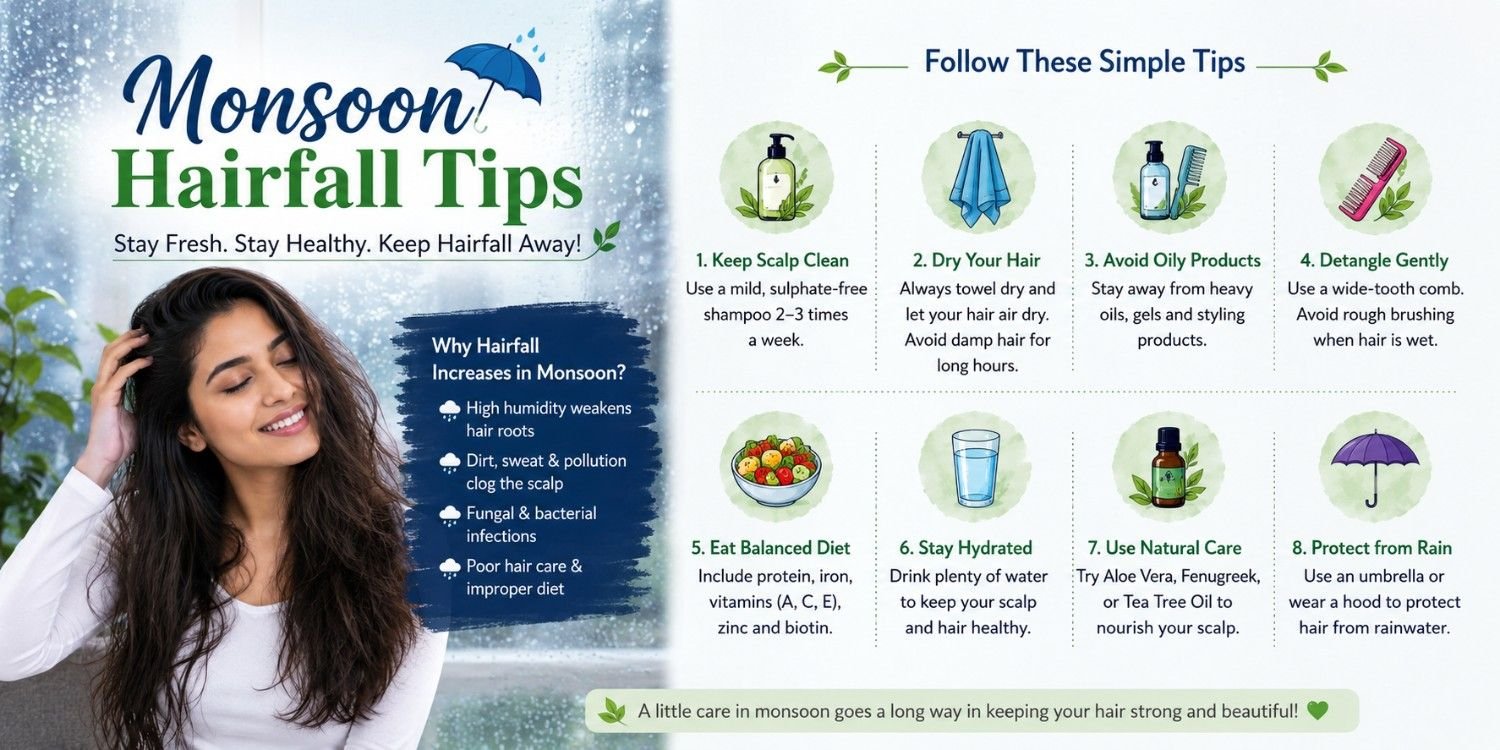
During monsoon, the humidity level rises significantly. Excess moisture makes the scalp oily and creates the perfect environment for dandruff, fungal infections, and bacterial growth. Rainwater may also contain pollutants that weaken hair strands. Combined with nutritional deficiencies and poor hair care habits, these factors contribute to increased hair fall.
Understanding these causes makes it easier to follow the right Monsoon Hairfall Tips for healthier hair.
1. Keep Your Scalp Clean
One of the most effective Monsoon Hairfall Tips is maintaining a clean scalp. Dirt, sweat, oil, and pollution accumulate more quickly during the rainy season, clogging hair follicles and causing hair fall.
Wash your hair two to three times a week using a mild sulfate-free shampoo. A clean scalp promotes healthy hair growth and reduces the risk of dandruff and infections.
2. Wash Your Hair After Getting Wet in the Rain
One of the simplest yet most important Monsoon Hairfall Tips is never allowing rainwater to remain in your hair.
Rainwater often contains pollutants and acidic particles that can damage your scalp and weaken hair roots. If your hair gets wet in the rain, rinse it with clean water as soon as possible and gently shampoo if necessary.
3. Keep Your Hair Dry
Humidity creates excessive moisture on the scalp, encouraging fungal infections and dandruff.
Among the most practical Monsoon Hairfall Tips is ensuring your scalp remains dry. Dry your hair naturally or with a microfiber towel after washing. Avoid tying your hair while it is still wet because trapped moisture weakens the roots.
4. Oil Your Hair the Right Way
Hair oil nourishes the scalp and improves blood circulation. However, excessive oiling during monsoon can attract dirt and increase scalp problems.
One of the best Monsoon Hairfall Tips is applying coconut oil, almond oil, or argan oil once or twice a week before shampooing. Massage gently for about fifteen minutes to strengthen your hair roots.
5. Eat a Protein-Rich Diet

Healthy hair starts from within.
Your diet directly affects hair growth and hair strength.
One of the most important Monsoon Hairfall Tips is consuming foods rich in protein, iron, zinc, biotin, omega-3 fatty acids, and Vitamin C.
Include foods like:
- Eggs
- Paneer
- Fish
- Lentils
- Green leafy vegetables
- Nuts and seeds
- Citrus fruits
A balanced diet nourishes your hair follicles and minimizes seasonal hair loss.
6. Avoid Heat Styling
Hair becomes more fragile during monsoon because of increased moisture.
One of the easiest Monsoon Hairfall Tips is limiting the use of hair straighteners, curling irons, and blow dryers. Excessive heat damages the hair cuticle and increases breakage.
Whenever possible, let your hair dry naturally.
7. Use a Wide-Tooth Comb
Wet hair is at its weakest and breaks easily.
Another useful Monsoon Hairfall Tip is using a wide-tooth comb to gently detangle your hair. Start from the ends and slowly work upward instead of pulling from the roots.
Avoid brushing wet hair aggressively.
8. Control Dandruff During Monsoon
Humidity encourages dandruff, one of the leading causes of seasonal hair fall.
One of the most recommended Monsoon Hairfall Tips is using an anti-dandruff shampoo if you notice flakes or scalp itching. Keeping your scalp healthy significantly reduces hair shedding.
9. Stay Hydrated
Hydration is often overlooked but plays an important role in maintaining healthy hair.
One of the simplest Monsoon Hairfall Tips is drinking at least two to three liters of water every day. Proper hydration improves blood circulation and keeps your scalp healthy.
10. Trim Split Ends Regularly
Split ends weaken the hair shaft and increase breakage.
Among the most effective Monsoon Hairfall Tips is trimming your hair every six to eight weeks. Regular trims keep your hair looking healthy while preventing damage from spreading.
11. Use Natural Hair Masks
Natural ingredients can strengthen your hair during the rainy season.
Some excellent homemade masks include:
- Aloe vera gel
- Fenugreek (methi) paste
- Yogurt and honey mask
- Coconut oil massage
- Onion juice (use occasionally)
These natural remedies nourish the scalp and complement your regular hair care routine.
12. Manage Stress and Sleep Well
Stress is a major cause of hair fall throughout the year, including during monsoon.
One of the most overlooked Monsoon Hairfall Tips is getting seven to eight hours of quality sleep every night and practicing stress management techniques like yoga, meditation, or regular exercise.
Healthy lifestyle habits promote stronger hair growth.
Common Mistakes to Avoid During Monsoon
Even while following the best Monsoon Hairfall Tips, many people unknowingly damage their hair.
Avoid these mistakes:
- Sleeping with wet hair
- Washing hair with very hot water
- Using harsh shampoos frequently
- Applying excessive hair oil
- Sharing combs and towels
- Ignoring dandruff
- Using too many styling products
Avoiding these habits can significantly improve your hair health.
When Should You Consult a Dermatologist?
Although seasonal hair fall is common, you should seek medical advice if you experience:
- Hair fall lasting more than three months
- Bald patches
- Severe dandruff
- Persistent scalp itching
- Painful scalp infections
- Sudden excessive hair shedding
A dermatologist can identify underlying causes and recommend the most appropriate treatment.
Final Thoughts
Hair fall during the rainy season is a temporary concern for most people, but proper care can make a significant difference. By following these Monsoon Hairfall Tips, you can reduce seasonal hair fall, strengthen your hair roots, and maintain a healthy scalp. Keeping your scalp clean, eating a balanced diet, staying hydrated, avoiding excessive heat styling, and protecting your hair from rainwater are simple yet effective steps toward healthier hair.
Start following these Monsoon Hairfall Tips today and enjoy stronger, shinier, and healthier hair throughout the monsoon season.