
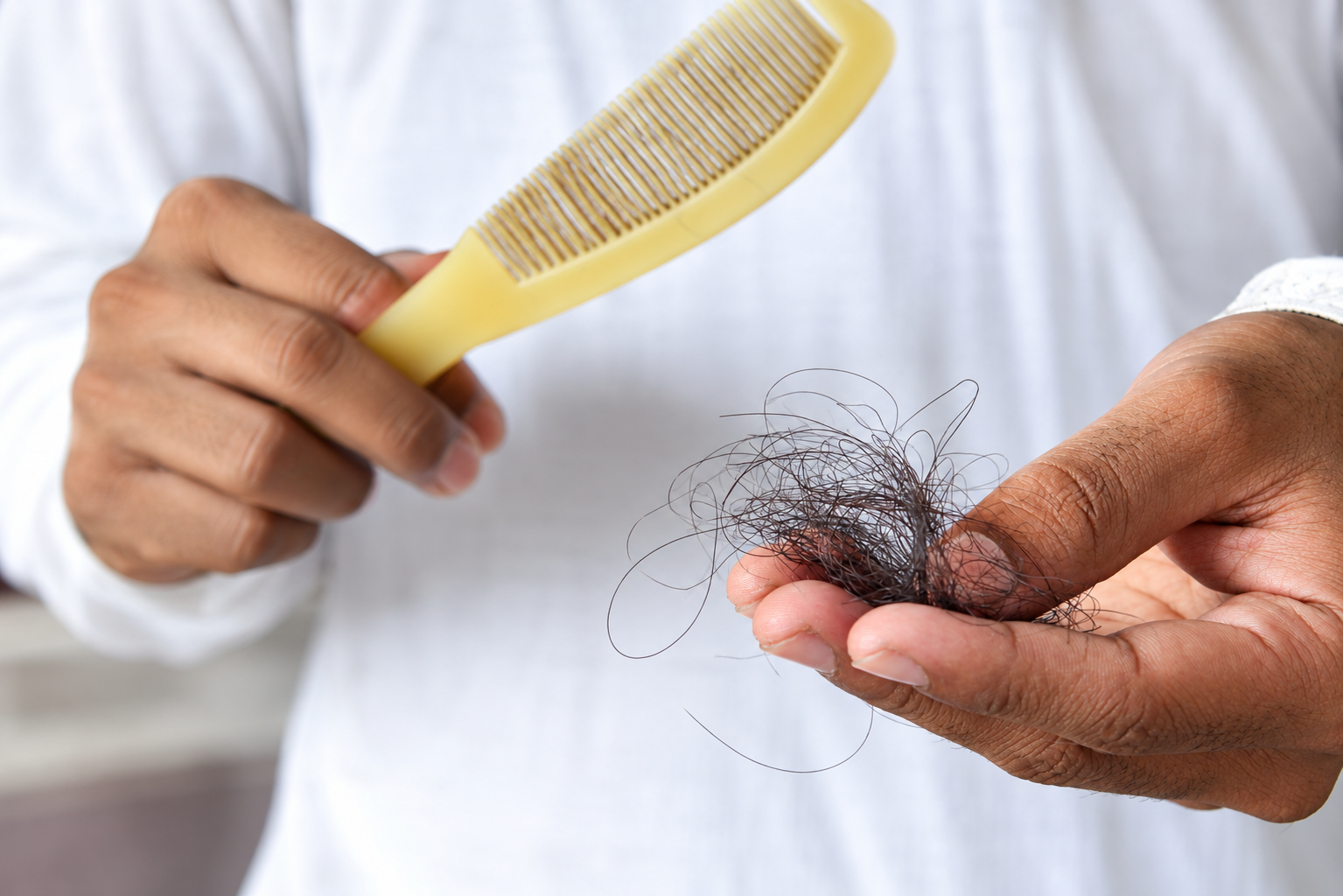
What Causes Hair Fall
There is never a single unified root cause behind hair fall. There is no fixed single reason that causes everyone to experience hair loss; each person’s cause of hair fall may differ from others, depending entirely on their individual circumstances.
We have sorted out the most common causes of hair fall for you to cross-check against your own situation:
Chronic high stress and insufficient sleep: If you stay in a constant state of mental tension, or stay up late for long periods and fail to get enough sleep, you may shed more hair than usual. This is a very common trigger for hair fall.
Inadequate nutrient intake or insufficient protein consumption: When the food you eat daily cannot supply your body with the nutrients it needs, or you fail to consume enough protein required by your body, it will undermine your hair’s growth condition and lead to hair fall issues.
Fluctuations in hormone levels: Once your body’s hormone levels shift and change, it will disrupt the normal growth of hair, becoming a trigger for hair fall.
Genetic factors, or a family history of hair loss: If older family members have experienced hair loss, or your own genetic code carries related traits, you are more likely to develop hair fall than others.
During an illness, or in the recovery period after a serious illness: Even if you only have a common illness, or have just recovered from a major illness and your body is still recuperating, your overall bodily state is depleted, and your hair will be affected accordingly, leading to hair fall.
Relevant conditions on the scalp: If the scalp itself develops rashes, inflammation, or other uncomfortable conditions that prevent it from providing a healthy growth environment for hair, it will also trigger hair fall.
Frequent use of high-heat styling tools: Regularly using tools that generate high heat such as straighteners and curling irons to style your hair, subjecting your hair to repeated heat exposure, will damage the hair shafts over time and lead to hair fall.
Frequent chemical treatments such as hair dyeing and perming: Repeatedly applying products with chemical components like hair dye and perm solution to your hair will cause the agents to continuously erode the hair shafts and scalp, gradually resulting in hair fall.
Wearing overly tight hairstyles that pull on the hair long-term: Constantly tying your hair up tightly, such as in tight ponytails or dreadlocks, keeps the hair shafts under constant tension, and the long-term pulling force on the hair roots will cause them to gradually loosen and shed.
Brushing your hair too roughly, or carelessly pulling on wet hair: Applying excessive force and being rough when brushing your hair, or tugging at your hair to style it while it is still wet—wet hair is inherently more fragile, and this kind of mistreatment easily leads to broken and shed hair.
Taking specific medications, or having pre-existing health conditions: If you are taking certain specific medications, or have your own related health issues, it will also affect your hair’s condition and trigger hair fall.
If you cannot identify the exact cause of excessive hair shedding or if it is already affecting your quality of life – schedule an appointment with a healthcare professional. They will be able to examine your scalp and hair and determine the next course of action.
Frequently Asked Questions
1. What are the most common causes of hair loss?
The most common causes of hair loss are genetic predispositions, chronic stress, poor nutrition and dieting, chemical damages to hair, illness or physical discomfort, scalp irritation, tight hairstyles, and hormone irregularities.
2. How can I reduce hair loss naturally?
The best way to reduce hair loss is to minimize any additional damages to hair follicles and follow a healthy diet that will provide your hair with all the necessary micronutrients to grow stronger and longer. However, an individual approach towards hair loss prevention is required for each person, depending on the reason for their hair loss.
3. What is the best hair care routine to reduce hair loss?
The best hair care routine is to keep your hair and scalp clean and avoid causing any damage to your hair and scalp by using excessive heat or rough brushing. Make sure to use the right conditioner and limit the damages caused by chemical hair treatments.
4. Does stress cause hair loss?
Hair loss after stressful events can be related to Telogen effluvium, which is a disorder that provokes excessive hair shedding after a stressful event.
5. Can poor diet cause hair loss?
Poor diet and lack of nutrients may prevent your hair from growing properly.
6. How often should I wash my hair if I have hair loss?
The frequency of washing your hair depends on the health of your scalp and oil production. You should avoid excessive washing and irritation of the scalp. Do not use hot water or rough scrubbing when washing your hair.
7. Does cutting hair reduce hair loss?
Hair cutting does not prevent further hair shedding, but it does help your hair grow healthier and thicker, as well as reducing split ends.
Hair Fall vs Hair Breakage: What’s the Difference?
Many people cannot tell which issue their hair is facing. Only by first clarifying whether you are experiencing Hair Fall or Hair Breakage can you choose the correct treatment method.
First, let’s talk about what Hair Fall looks like:
Hair Fall occurs when a hair strand falls out completely from the scalp. The hair you find from Hair Fall will be a hair of its full length.
It may be related to internal factors of the body, and the root cause behind it must be identified first before it can be resolved.
Next, let’s discuss what Hair Breakage is:
Hair Breakage is when a hair strand snaps along the hair shaft. The hair you find in this case are all short broken fragments of Hair FallHair BreakageHair.
It is mostly related to physical and chemical damage, and this type of damage can be reduced by caring for your hair with gentle methods.
Stress and Hair Shedding
The normal hair growth cycle can be disrupted by things such as stress. This phenomenon is conditional; under severe physical or emotional stress, some individuals may see delayed hair shedding status when immediate visible results are not noted. This can cause difficulties in connecting the hair fall to the preceding event of stress. You might shed more after stressful events, such as major exams, emotional stress or illness, sleepless nights and sudden changes in weight.
Scalp Health and Hair Growth
A healthy scalp encourages healthier hair. Too much oil, flakes of dead skin, residue from hair products and other aggravators will work against your own personal comfort on the scalp and caring for your mane. Follow their wash schedule for your scalp type, scratch gently and then not at all and use the correct products for you and your hair. If you have itchy skin scales that are persistently red or becoming abnormal for the scalp with hair loss where patches appear seek a dermatologist.
Heat Styling and Chemical Treatments
Frequent heat styling and chemical treatments can weaken hair and increase breakage. Straighteners, curling irons, high-heat blow drying, bleaching, and colouring can make hair dry and fragile over time. To protect your hair, limit heat exposure, avoid very high temperatures, and leave enough time between chemical treatments. These habits can help reduce hair damage and breakage.
How Long Does It Take to See Improvement?
Hair growth takes time, so you should not expect results within a few days. Follow a consistent hair care routine and give your hair time to improve. If hair loss continues, becomes worse, or causes noticeable thinning or bald patches, it is better to find the underlying cause instead of simply trying more hair products.
Conclusion
Understanding the hair fall causes is more important than simply buying another hair product.
Stress, nutrition, genetics, hormonal changes, scalp problems, heat styling, tight hairstyles, and chemical treatments can all play a role in hair shedding or damage.
A simple hair care routine to reduce hair fall should focus on gentle washing, conditioning, careful handling of wet hair, reducing excessive heat and chemical treatments, avoiding tight hairstyles, and maintaining healthy daily habits.
You do not need to change everything at once. Start with two or three habits that fit your routine and follow them consistently.
If your hair fall is sudden, severe, or persistent, don’t rely only on home remedies. Getting the underlying cause checked by a healthcare professional is often the better approach.
For more information regarding👉 health and wellness, check out our other helpful health guides.