
Introduction
Maintaining healthy Blood Sugar (Diabetes) levels is essential for overall health and well-being. High Blood Sugar (Diabetes) levels can increase the risk of diabetes, heart disease, and other health complications. If you are looking for how to control Blood Sugar (Diabetes), this guide covers everything you need to know, including causes, symptoms, home remedies, diet tips, and supplements. Understanding how to control blood sugar effectively can help reduce the risk of diabetes-related complications and improve overall health.
What is Blood Sugar (Diabetes)?
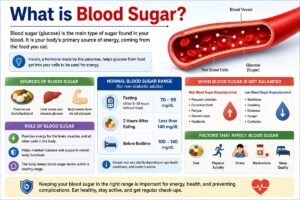
Blood Sugar (Diabetes) refers to the amount of glucose present in your bloodstream. Glucose is the body’s primary source of energy and comes from the food we eat. A healthy Blood Sugar level helps your body function properly, while high or low Blood Sugar levels can lead to health problems. Many people search for how to control blood sugar to maintain healthy glucose levels and reduce the risk of diabetes-related complications.
Normal Blood Sugar (Diabetes) Levels
- Fasting Blood Sugar (Diabetes): 70–99 mg/dL
- Before Meals: 80–130 mg/dL
- After Meals: Less than 180 mg/dL
Using a Blood Sugar Monitor can help track your glucose levels regularly.
Causes of Blood Sugar (Diabetes)
There are several causes of Blood Sugar (Diabetes) fluctuations. Understanding these causes can help you take the right steps to maintain healthy blood sugar levels.
1. Excessive Sugar Consumption (अधिक चीनी का सेवन)
2. Obesity or Excess Body Weight (मोटापा या अधिक वजन)
3. Lack of Physical Activity (शारीरिक गतिविधि की कमी)
4. Stress and Anxiety (तनाव और चिंता)
5. Poor Sleep Quality (खराब नींद की गुणवत्ता)
6. Family History of Diabetes (मधुमेह का पारिवारिक इतिहास)
7. Hormonal Changes (हार्मोनल परिवर्तन)
8. Certain Medications (कुछ दवाइयों का सेवन)
Understanding the cause of Blood Sugar (Diabetes) problems is the first step toward effective management and long-term health.
Common Diabetes Symptoms
Recognizing diabetes symptoms early can help prevent complications. Common symptoms include:
- Frequent Urination (बार-बार पेशाब आना)
2. Excessive Thirst (बहुत अधिक प्यास लगना)
3. Increased Hunger (ज्यादा भूख लगना)
4. Fatigue and Weakness (थकान और कमजोरी)
5. Blurred Vision (धुंधला दिखाई देना)
6. Slow Wound Healing (घावों का देर से भरना)
7. Unexplained Weight Loss (बिना कारण वजन कम होना)
8. Frequent Infections (बार-बार संक्रमण होना)
How to Control Blood Sugar Naturally (Diabetes)

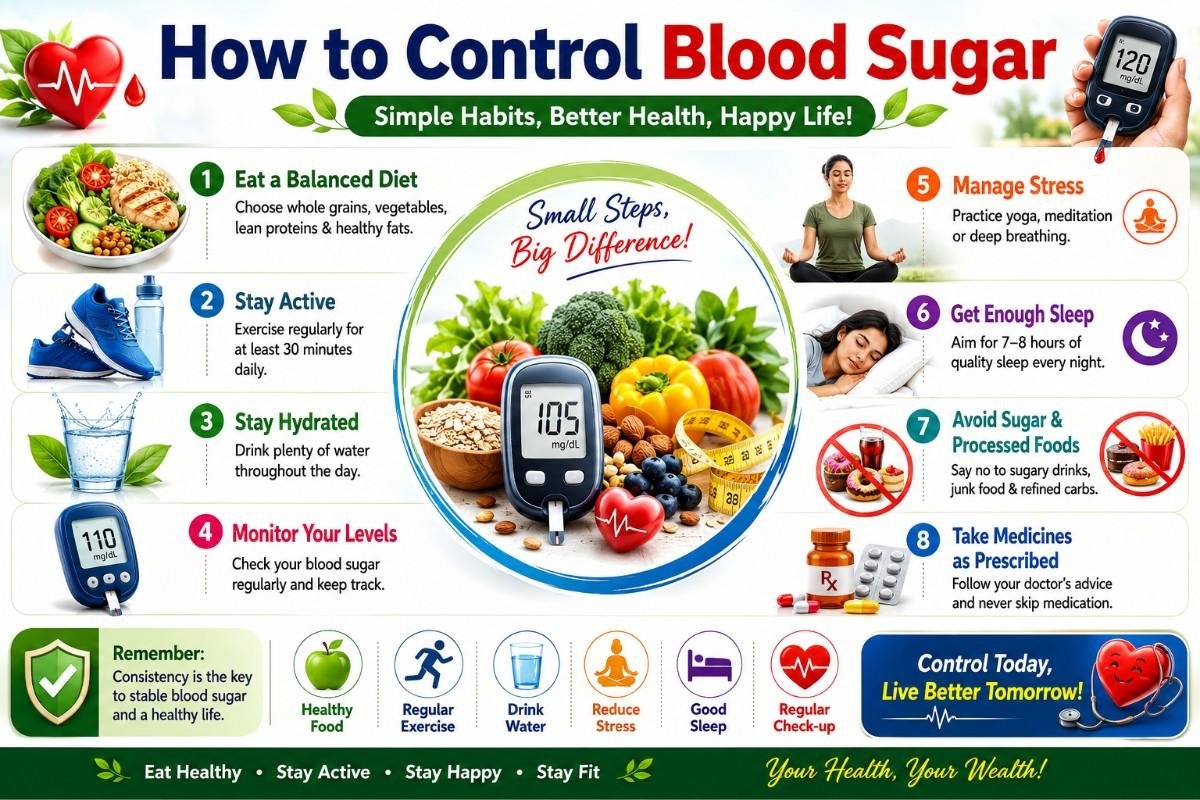
Many people search for how to control sugar without relying solely on medications. Here are some proven strategies:
1. Follow a Balanced Diet
One of the most effective answers to how to control blood sugar is following a balanced diet rich in fiber, protein, and healthy fats.
- Green leafy vegetables
- Whole grains
- Lentils and beans
- Nuts and seeds
- Low-sugar fruits
- Greek yogurt and curd
Avoid refined carbohydrates, sugary drinks, and processed foods.
2. Exercise Regularly
If you’re wondering how to control blood sugar, regular physical activity should be part of your daily routine.
- Brisk walking
- Cycling
- Yoga
- Swimming
can help lower blood glucose and improve insulin sensitivity.
3. Maintain a Healthy Weight
If you’re wondering how to control blood sugar then weight management is one of the most effective natural ways to control sugar and reduce the risk of type 2 diabetes.
4. Monitor Blood Sugar Levels
Using a blood sugar monitor or glucose monitor can help track daily fluctuations and identify patterns that affect blood sugar control.
5. Manage Stress
Chronic stress can increase blood sugar levels. Try:
- Meditation
- Deep breathing exercises
- Yoga
- Mindfulness practices
These techniques can support healthy glucose regulation.
Home Remedies for Blood Sugar Control (Diabetes)
Many traditional remedies have been used for generations when looking for how to control blood sugar naturally.. While these remedies may help, they should complement—not replace—medical advice.
Fenugreek (Methi – मेथी)
Fenugreek seeds are rich in soluble fiber and may help slow sugar absorption.
How to use:
- Soak 1–2 teaspoons of methi seeds overnight.
- Consume them on an empty stomach in the morning.
Bitter Gourd (Karela – करेला)
Karela contains compounds that may help improve glucose metabolism.
How to use:
- Drink fresh karela juice in moderation.
- Include karela in your meals.
Cinnamon (Dalchini – दालचीनी)
Cinnamon is one of the most popular herbs and spices used to support blood sugar management.
How to use:
- Add dalchini powder to tea, oatmeal, or smoothies.
Indian Gooseberry (Amla – आंवला)
Amla is rich in vitamin C and antioxidants that support overall metabolic health.
How to use:
- Consume fresh amla juice or powder.
Turmeric (Haldi – हल्दी)
Haldi contains curcumin, which has anti-inflammatory properties and may support healthy glucose levels.
How to use:
- Add turmeric to curries or warm milk.
Gymnema Sylvestre (Gudmar – गुड़मार)
Known as the “sugar destroyer” herb in traditional medicine, Gudmar may help reduce sugar cravings.
Neem (नीम)
Neem leaves are traditionally used to support blood sugar balance and overall wellness.
These remedies are often recommended among those seeking natural ways to control sugar and how to control sugar naturally.
Best Supplements to Help Lower Blood Sugar (Diabetes)
Many people look for supplements to help lower blood sugar as part of a comprehensive diabetes management plan.
Magnesium
Magnesium plays a role in insulin function and glucose metabolism.
Chromium
Chromium may help improve insulin sensitivity and support healthy blood sugar levels.
Alpha-Lipoic Acid (ALA)
ALA is an antioxidant that may help improve glucose utilization.
Berberine
Berberine is one of the most researched natural compounds for supporting blood sugar control.
Cinnamon Extract
Cinnamon supplements may provide concentrated support for healthy glucose management.
Vitamin D
Low vitamin D levels have been associated with impaired blood sugar regulation.
Before taking any supplements, consult a healthcare professional, especially if you are taking diabetes medications.
Best Food for Diabetes Control (Diabetes)
If you’re searching for the best food for diabetes control, consider adding these foods to your diet:
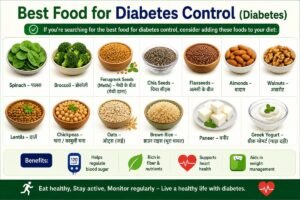
- Spinach – पालक
- Broccoli – ब्रोकोली
- Fenugreek Seeds (Methi) – मेथी के बीज (मेथी दाना)
- Chia Seeds – चिया सीड्स
- Flaxseeds – अलसी के बीज
- Almonds – बादाम
- Walnuts – अखरोट
- Lentils – दालें
- Chickpeas – चना / काबुली चना
- Oats – ओट्स (जई)
- Brown Rice – ब्राउन राइस (भूरा चावल)
- Paneer – पनीर
- Greek Yogurt – ग्रीक योगर्ट (गाढ़ा दही)
These foods can help support stable energy levels and contribute to lower blood glucose naturally.
Importance of Using a Blood Sugar Monitor
Regular monitoring is essential for people with diabetes or prediabetes. A blood sugar monitor or glucose monitor can help you:
- Track blood sugar trends
- Understand food impacts
- Monitor treatment effectiveness
- Prevent dangerous highs and lows
Consistent monitoring is one of the most effective ways to manage diabetes and maintain long-term health.
Final Thoughts
Learning how to control blood sugar involves a combination of healthy eating, regular exercise, stress management, proper monitoring, and informed use of supplements to help lower blood sugar. By recognizing diabetes symptoms, choosing the best food for diabetes control, using a blood sugar monitor or glucose monitor, and adopting natural ways to control sugar, you can take meaningful steps toward better health and knowing how to control blood sugar consistently can support long-term health and reduce the risk of diabetes complications.
Remember that home remedies such as Methi (मेथी), Karela (करेला), Dalchini (दालचीनी), Amla (आंवला), Haldi (हल्दी), Gudmar (गुड़मार), and Neem (नीम) may support healthy blood sugar levels, but they should be used alongside professional medical guidance and regular monitoring.