
10 Best Hair Fall Treatment Methods for Strong and Healthy Hair
What is Hair Fall?
Hair fall is a common problem that affects millions of people worldwide. Losing a few strands of hair every day is normal, but excessive hair loss can be a sign of an underlying issue. Hair fall can affect both men and women and may occur due to stress, poor nutrition, hormonal changes, genetics, or improper hair care practices.
Healthy hair is an important part of our appearance and confidence. Understanding the causes of hair fall and choosing the right hair fall treatment can help prevent further hair loss and promote healthy hair growth.
Common Causes of Hair Fall
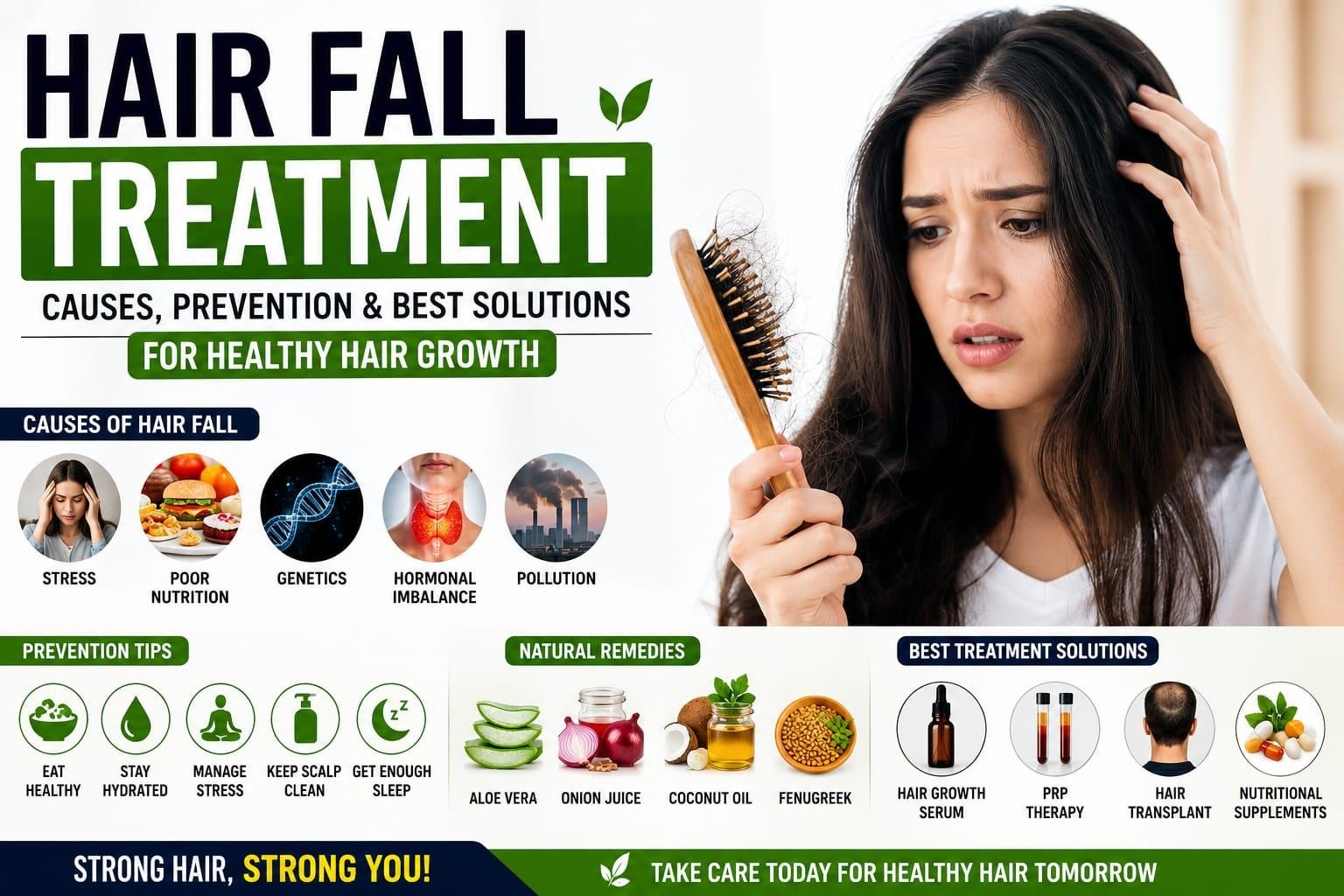
There are several reasons why people experience hair fall. Some of the most common causes include:
1. Genetic Factors
Hereditary hair loss is one of the leading causes of hair fall. If your parents have experienced hair loss, you may be more likely to face the same issue.
2. Nutritional Deficiencies
Lack of essential nutrients such as iron, protein, vitamin D, zinc, and biotin can weaken hair follicles and increase hair fall.
3. Stress and Anxiety
Physical and emotional stress can disrupt the normal hair growth cycle, leading to excessive hair shedding.
4. Hormonal Changes
Hormonal imbalances caused by pregnancy, thyroid disorders, menopause, or PCOS can contribute to hair fall.
5. Poor Hair Care Habits
Excessive use of chemical treatments, heat styling tools, and harsh shampoos can damage hair and increase breakage.
6. Medical Conditions
Certain medical conditions, infections, and medications can also lead to hair loss.
Best Hair Fall Treatment Options
Choosing the right hair fall treatment depends on the cause of hair loss. Here are some effective solutions:
1. Maintain a Healthy Diet
A balanced diet rich in vitamins, minerals, and proteins helps strengthen hair roots and promote healthy growth.
2. Use Mild Hair Care Products
Choose shampoos and conditioners that are suitable for your hair type and free from harsh chemicals.
3. Scalp Massage
Regular scalp massages improve blood circulation and help nourish hair follicles.
4. Medical Treatments
Dermatologists may recommend medications, topical solutions, or advanced procedures depending on the severity of hair loss.
5. Reduce Stress
Practicing meditation, yoga, and regular exercise can help manage stress and reduce hair fall.
Natural Hair Fall Treatment at Home
Many natural remedies can support healthy hair growth and reduce hair fall.
Coconut Oil Massage
Coconut oil nourishes the scalp and strengthens hair from the roots.
Aloe Vera
Aloe vera helps soothe the scalp and may reduce irritation and dandruff.
Onion Juice
Onion juice contains sulfur, which may help improve blood circulation to hair follicles.
Fenugreek Seeds
Fenugreek seeds are rich in proteins and nutrients that support stronger hair growth.
Green Tea Rinse
Green tea contains antioxidants that may help improve scalp health.
How to Prevent Hair Fall Naturally
Prevention is always better than treatment. Follow these simple tips to keep your hair healthy:
- Eat a protein-rich diet.
- Drink plenty of water.
- Avoid excessive heat styling.
- Protect your hair from pollution and sunlight.
- Sleep for at least 7–8 hours daily.
- Manage stress effectively.
- Avoid tight hairstyles that pull on the hair roots.
- Use a gentle shampoo and conditioner.
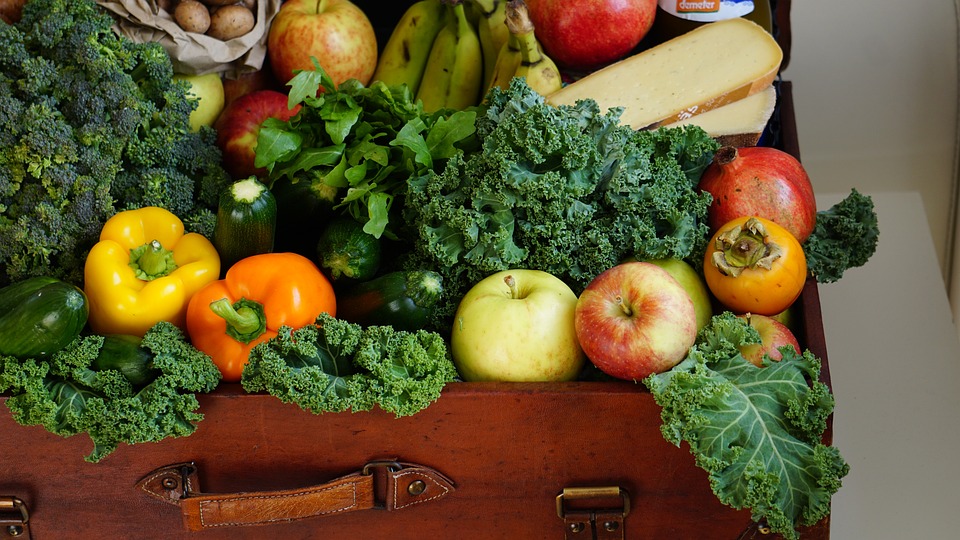
Best Foods for Healthy Hair Growth
A nutritious diet plays a major role in maintaining healthy hair.
Eggs
Rich in protein and biotin, eggs support strong hair growth.
Spinach
Spinach provides iron and vitamins that help nourish hair follicles.
Nuts and Seeds
They contain healthy fats, zinc, and vitamin E, which contribute to healthy hair.
Fish
Fatty fish such as salmon provide omega-3 fatty acids that support scalp health.
Fruits
Fruits rich in vitamin C help the body absorb iron and support collagen production.
Benefits of Early Hair Fall Treatment
Starting hair fall treatment early can provide several benefits:
- Prevents further hair loss.
- Improves hair density.
- Strengthens hair follicles.
- Enhances scalp health.
- Boosts confidence and appearance.
When Should You Consult a Doctor?
You should consult a healthcare professional if:
- Hair loss is sudden or severe.
- You notice bald patches.
- Hair fall is accompanied by scalp pain or itching.
- Home remedies are not effective.
- Hair loss affects your confidence and daily life.
Conclusion
Hair fall is a common issue, but it can often be managed with the right approach. Understanding the causes, following a healthy lifestyle, maintaining proper nutrition, and choosing effective hair fall treatment methods can significantly improve hair health. Whether you prefer natural remedies or medical solutions, consistency and proper care are key to achieving stronger, healthier, and thicker hair.