

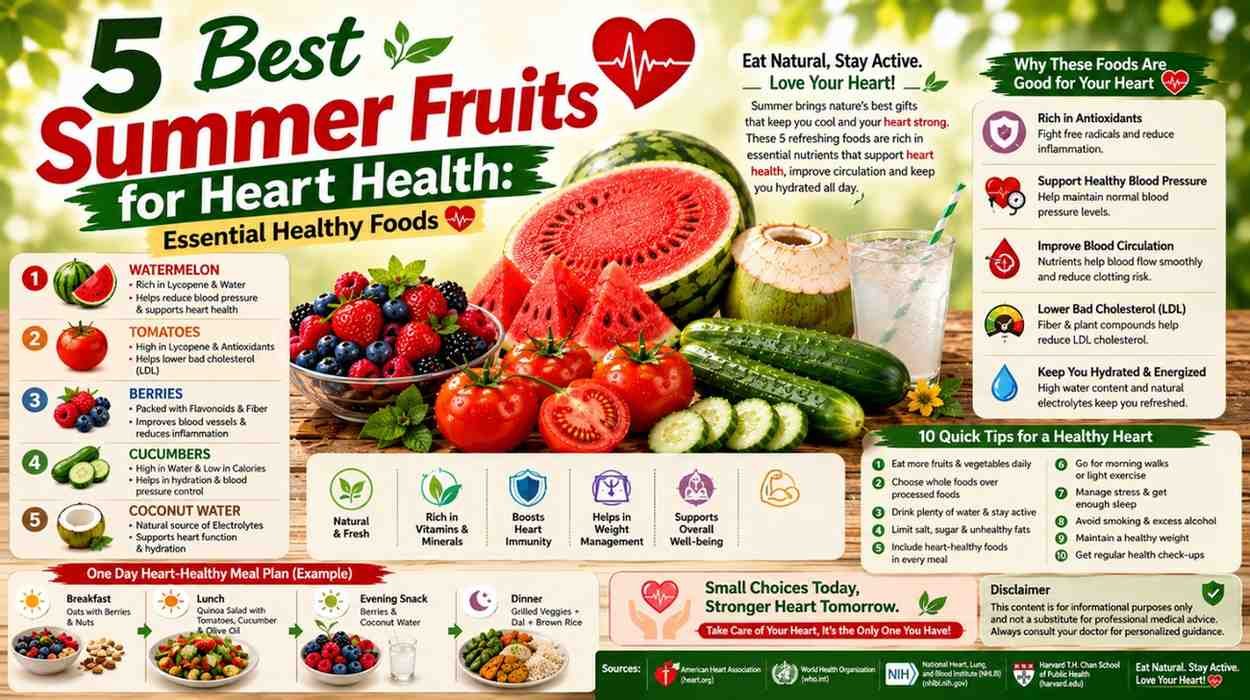
Watermelon, tomatoes, berries, cucumbers, and coconut water are the best summer foods for heart health. They provide vital hydration, potassium, and antioxidants to support healthy blood pressure and smooth circulation during hot weather.
Why Summer Heat Puts Extra Strain on Your Heart
Higher temperatures make your heart work harder to keep your body cool. Dehydration on top of that raises heart rate and lowers blood volume.
A smart summer diet leans on foods that are:
- Rich in water content
- High in potassium
- Full of antioxidants
- Good sources of fiber
- Low in saturated fat
Top 5 Best Foods for Heart Health in Summer
including fresh summer fruits for hearth health in your daily routine helps protect your blood vessels during hot weather.
Watermelon — One of the Best Fruits for Heart Health
When choosing summer fruits for heart health, watermelon tops the list due to its high lycopene and citrulline content.
Watermelon is over 90% water, making it one of the most refreshing fruits for hot weather. It’s also rich in lycopene, an antioxidant linked to cardiovascular health.
Did You Know?
Watermelon contains citrulline, an amino acid your body converts into arginine — a compound involved in healthy blood vessel function.
Quick Benefits
- Keeps you hydrated on hot days
- Rich in lycopene, an antioxidant linked to heart health
- Contains potassium to help manage blood pressure
- Naturally low in calories
- A refreshing way to curb sugary snack cravings
Nutrition Table
Checking nutritional values helps you select the best summer fruits for heart health tailored to your daily diet.
| Nutrient | Benefit |
| Lycopene | Antioxidant linked to cardiovascular health |
| Potassium | Supports healthy blood pressure |
| Vitamin C | Supports immune function |
| Citrulline | May support healthy blood vessel function |
| Water (~92%) | Keeps you hydrated in summer heat |
Best Time to Eat
Mid-morning or early afternoon works best, ideally apart from heavy meals for easier digestion.
Best Ways to Eat
- Fresh chilled slices
- Blended into a smoothie
- Added to a fruit salad
- Watermelon and feta salad
- Frozen watermelon cubes as a treat
Preparing a daily bowl of seasonal summer fruits for heart health is a natural way to support blood vessel function.
-
Who Should Avoid or Be Careful
-
People with diabetes should watch portion size due to its natural sugar content.
Those with kidney conditions should check potassium intake with their doctor.
People sensitive to FODMAPs may notice bloating with large portions
Expert Tip
Pair watermelon with a source of protein, like Greek yogurt or a handful of nuts, to slow sugar absorption and keep your energy steady
Common Mistakes
- Eating a large portion right after a heavy meal, which can cause bloating
- Choosing packaged watermelon juice with added sugar instead of fresh fruit
- Assuming unlimited portions are fine just because it feels light
2. Tomatoes — Rich in Heart-Protective Nutrients
Tomatoes are another great addition among summer fruits for heart health because cooked or fresh tomatoes help maintain healthy arterial function.
Tomatoes are one of the richest everyday sources of lycopene and a genuinely versatile heart-health food, whether eaten raw or cooked.
Did You Know?
Cooking tomatoes actually increases how much lycopene your body can absorb — unlike most fruits and vegetables, which lose nutrients when cooked.
Nutrition Table
| Nutrient | Benefit |
| Lycopene | Linked to lower oxidative stress |
| Potassium | Supports blood pressure balance |
| Vitamin C | Antioxidant support |
| Folate | Supports healthy blood vessel function |
| Fiber | Supports digestion and fullness |
Best Time to Eat
Lunch or dinner — tomatoes work equally well raw or cooked.
Best Ways to Eat
- Fresh tomato salad
- Tomato-cucumber salsa
- Homemade tomato soup
- Added to sandwiches and warps
- Roasted as a simple side dish
Who Should Avoid or Be Careful
People with acid reflux or GERD may need to limit intake.
Those with a tomato allergy (uncommon) should avoid them.
Nightshade-sensitive individuals may want to monitor how they react.
Expert Tip
Add a drizzle of olive oil to tomatoes — lycopene is fat-soluble, so a little healthy fat helps your body absorb more of it.
Common Mistakes
- Relying on canned tomatoes that are high in added sodium
- Peeling off the skin, where much of the fiber and nutrients sit
- Pairing tomatoes with heavily processed, sugar- or salt-loaded dressings
3. Berries — Small Fruits Good for the Heart
Blueberries, strawberries, raspberries, and blackberries are packed with anthocyanins — the antioxidants responsible for their deep color.
Did You Know?
The deeper the color of a berry, the more anthocyanins it typically contains — these compounds are linked to improved circulation and lower inflammation
Quick Benefits
- Packed with antioxidants (anthocyanins)
- May support healthy blood vessels
- High in fiber, low in calories
- Helps reduce oxidative stress
- Naturally sweet — satisfies cravings without added sugar
Nutrition Table
| Nutrient | Benefit |
| Anthocyanins | Antioxidant linked to vascular health |
| Fiber | Supports digestion and fullness |
| Vitamin C | Supports immunity and skin health |
| Manganese | Supports normal metabolism |
Best Time to Eat
Breakfast or as a mid-morning snack works best.
Best Ways to Eat
- Mixed into Greek yogurt
- Blended into smoothies
- Topped over oatmeal
- Eaten fresh as a snack
- Frozen for a cool summer treat
Who Should Avoid or Be Careful
Those with a specific berry allergy should avoid that variety.
People managing blood sugar should watch portions with very ripe, sweeter berries.
Always rinse thoroughly — berries can carry pesticide residue if not organic.
Expert Tip
Choose deeply colored, ripe berries — richer color generally means a higher antioxidant content
Common Mistakes
- Buying berries coated in sugary syrups or yogurt-style coatings
- Storing them unwashed and forgetting to check for mold
- Skipping frozen berries, which often match fresh ones in nutrition at a lower cost
. Cucumbers — Hydration Meets Heart Health
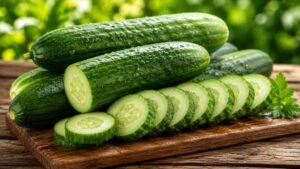
Cucumbers are often overlooked, but their extremely high water content makes them ideal for summer heart health.
Did You Know?
Cucumbers are more than 95% water, making them one of the most hydrating vegetables you can eat.
Quick Benefits
- Excellent natural hydration
- Low in calories
- Contains potassium to help balance sodium
- Refreshing and easy to add to any meal
- Contains antioxidants and vitamin K
Nutrition Table
| Nutrient | Benefit |
| Water (95%+) | Supports hydration |
| Potassium | Helps balance sodium levels |
| Vitamin K | Supports vascular and bone health |
| Antioxidants | Helps reduce oxidative stress |
Best Time to Eat
Afternoon, especially during peak summer heat.
Best Ways to Eat
- Cucumber salad with lemon and herbs
- Mint-cucumber infused water
- Added to sandwiches and wraps
- Cucumber raita
- Sliced with hummus as a snack
- Who Should Avoid or Be Careful
People sensitive to cucurbitacin’s (natural compounds in the skin) may want to peel cucumbers to ease bloating.
Those on a low-potassium diet should keep an eye on portion size.
Expert Tip
To gain maximum benefit, always buy organic summer fruits for heart health and consume them fresh.
Leave the peel on when you can — it holds a good share of the fiber and nutrients.
Common Mistakes
- Over-salting cucumber dishes, which works against their blood-pressure benefits
- Skipping a wash on waxed cucumbers before eating
- Pairing with heavy, creamy dressings that add unnecessary calories
5. Coconut Water — Nature’s Summer Electrolyte Drink

Coconut water is a natural source of potassium, magnesium, and electrolytes — useful in summer when sweating drains these minerals fast.
Did You Know?
Coconut water contains natural electrolytes, but it isn’t a substitute for medical oral rehydration solutions during serious dehydration or illness.
Quick Benefits
- Natural source of potassium and electrolytes
- Helps replenish fluids lost through sweat
- Lower in sugar than most sports drinks
- Naturally refreshing in hot weather
- Contains a modest amount of magnesium
Nutrition Table
| Nutrient | Benefit |
| Potassium | Supports healthy blood pressure and muscle function |
| Magnesium | Supports normal heart rhythm |
| Electrolytes | Helps replace what’s lost through sweat |
| Natural sugars | Provides quick energy (choose unsweetened varieties) |
Best Time to Eat
Afternoon or shortly after physical activity.
Best Ways to Eat
- Chilled, straight from the coconut
- As a smoothie base
- Mixed with fresh lime for extra flavor
- Frozen into ice cubes for infused water
Who Should Avoid or Be Careful
People with kidney conditions should monitor potassium intake with their doctor.
Those on certain blood pressure medications should check for interactions.
People with a coconut allergy should avoid it.
Expert Tip
Choose plain, unsweetened coconut water — many packaged versions add sugar that cancels out the health benefit.
Common Mistakes
- Assuming all packaged coconut water is unsweetened without checking the label
- Using it as a full replacement for plain water throughout the day
- Relying on it as rehydration during serious illness instead of medical guidance
- To get the best results from summer fruits for heart health, enjoy them fresh and avoid adding extra processed sugar or artificial flavors.
- Always buy raw and organic summer fruits for heart health instead of processed juices with added sugar.
Top 5 Foods Good for the Heart in Summer
| Food | Key Nutrients | Main Benefit | Best Time to Eat |
| Watermelon | Lycopene, Potassium, Vitamin C | Hydration, healthy blood vessels | Mid-morning |
| Tomatoes | Lycopene, Fiber, Potassium | Healthy cholesterol | Lunch |
| Berries | Anthocyanins, Fiber, Vitamin C | Reduces oxidative stress | Breakfast/snack |
| Cucumbers | Water, Potassium | Hydration, blood pressure balance | Afternoon |
| Coconut Water | Potassium, Magnesium, Electrolytes | Electrolyte balance, hydration | Afternoon/post-activity |
How to Build a Heart Healthy Diet in Summer
Eat More
- Fresh fruits and seasonal vegetables
- Whole grains, beans, and lentils
- Nuts, seeds, and olive oil
- Low-fat yogurt and fatty fish (where appropriate)
Limit
- Sugary drinks and packaged juices
- Deep-fried snacks
- Processed meat
- Excess salt and high-sodium packaged foods
Stay Hydrated
- Plain water throughout the day
- Unsweetened coconut water
- Lemon water or cucumber-mint infused water
- Eating fresh summer fruits for heart health is a natural way to maintain electrolyte balance during heatwaves.
Common Mistakes That Can Affect Heart Health
1. Drinking Too Many Sugary Summer Drinks
Many packaged juices and soft drinks pack in more added sugar than people realize.
Better choice: fresh fruit, unsweetened drinks, or plain water.
2. Skipping Meals
Skipping meals often backfires with overeating later in the day.
Better choice: balanced meals every 3–4 hours.
3. Too Much Hidden Salt
Many summer snacks carry more sodium than they appear to.
Better choice: check labels and lean toward fresh food.
4. Ignoring Portion Sizes
Even heart-healthy foods need reasonable portions to stay part of a balanced diet.
Simple One-Day Heart Healthy Diet Meal Plan for Summer
this simple meal plan incorporates the best summer fruits for hearth health to keep your energized all day.
| Meal | What to Eat |
| Breakfast | Oatmeal with mixed berries and low-fat milk |
| Mid-Morning | Fresh watermelon |
| Lunch | Whole wheat roti, spinach curry, tomato-cucumber salad, lentils |
| Evening Snack | Unsalted nuts and fresh fruit |
| Dinner | Grilled fish or beans, mixed vegetables, brown rice |
This daily meal plan makes it simple to incorporate these vital summer fruits for heart health into your breakfast and snack routine
Following a planned schedule makes it effortless to consume summer fruits for heart health every day.
Quick Tips for a Heart Healthy Diet This Summer
- Eat colorful fruits and vegetables daily
- Stay hydrated throughout the day
- Choose whole grains over refined grains
- Cut back on processed and packaged foods
- Reduce added sugar and sugary drinks
- Use healthy oils like olive oil in moderation
- Exercise regularly and sleep 7–9 hours
- Avoid smoking and limit alcohol
- Watch portion sizes, even for healthy foods
- Schedule regular check-ups, especially with high blood pressure, diabetes, or high cholesterol
- Adding fresh summer fruits for heart health to your morning routine keeps your arterial system protected.
Making summer fruits for heart health a regular part of your diet will support overall circulatory function.
Frequently Asked Questions
Always choose seasonal and organic summer fruits for heart health to gain maximum nutritional value.
What is the best food for heart health in summer?
Watermelon, tomatoes, berries, cucumbers, and coconut water are top choices — together they provide hydration, antioxidants, potassium, and fiber.
Which fruit is best for a healthy heart?
Berries and watermelon stand out: berries bring antioxidants and fiber, while watermelon offers hydration and lycopene.
Can diet really improve heart health?
Yes. A diet rich in fruits, vegetables, whole grains, legumes, nuts, and healthy fats is linked to better heart health when combined with regular exercise and healthy habits.
What foods should I avoid for a healthy heart?
Limit processed meats, sugary drinks, high-sodium foods, deep-fried items, and anything high in saturated or trans fats.
Is watermelon good for people with heart problems?
Generally yes, thanks to its water, potassium, vitamin C, and lycopene content. Those with kidney disease or specific dietary restrictions should check with their doctor first.
What should be on a heart healthy foods list?
A solid heart healthy foods list includes watermelon, tomatoes, berries, cucumbers, coconut water, whole grains, beans, nuts, olive oil, and fatty fish, alongside limited salt, sugar, and processed food.
What is the best diet for heart disease prevention?
The most effective diet for heart disease prevention emphasizes fruits, vegetables, whole grains, legumes, nuts, and healthy fats while limiting sodium, added sugar, and saturated fat — paired with regular exercise and routine check-ups.
Consuming fresh summer fruits for heart health daily is a natural, effective way to beat the heat and stay active.
Summary
Five foods stand out for heart health in summer: watermelon, tomatoes, berries, cucumbers, and coconut water.
Each brings a distinct mix of hydration, antioxidants, potassium, or electrolytes.
Small, consistent swaps — fresh fruit over sugary drinks, olive oil over processed dressings — add up over time.
Pair these foods with regular movement, good sleep, and proper hydration for the biggest heart-health benefit.
Medical Disclaimer: This article is for educational purposes only and should not replace professional medical advice. If you have heart disease, high blood pressure, diabetes, kidney disease, or any other medical condition, consult your healthcare provider before making significant dietary changes.
Conclusion
Protecting your heart doesn’t require complicated diets or expensive superfoods. Simple, seasonal choices — watermelon, tomatoes, berries, cucumbers, and coconut water — bring hydration and nutrients that support your cardiovascular system.
No single food prevents heart disease on its own. The real benefit comes from consistency over time.
Start today: add one of these five foods to your plate this week. Small, steady choices — a glass of coconut water instead of a sugary drink, watermelon instead of a packaged snack — build real heart health over time.
Read Also: Learn more daily health updates on Apna Rajya.
References
- American Heart Association (AHA) – https://www.heart.org
- World Health Organization (WHO) – https://www.who.int
- National Heart, Lung, and Blood Institute (NHLBI) – https://www.nhlbi.nih.gov
- Harvard T.H. Chan School of Public Health – https://www.hsph.harvard.edu