

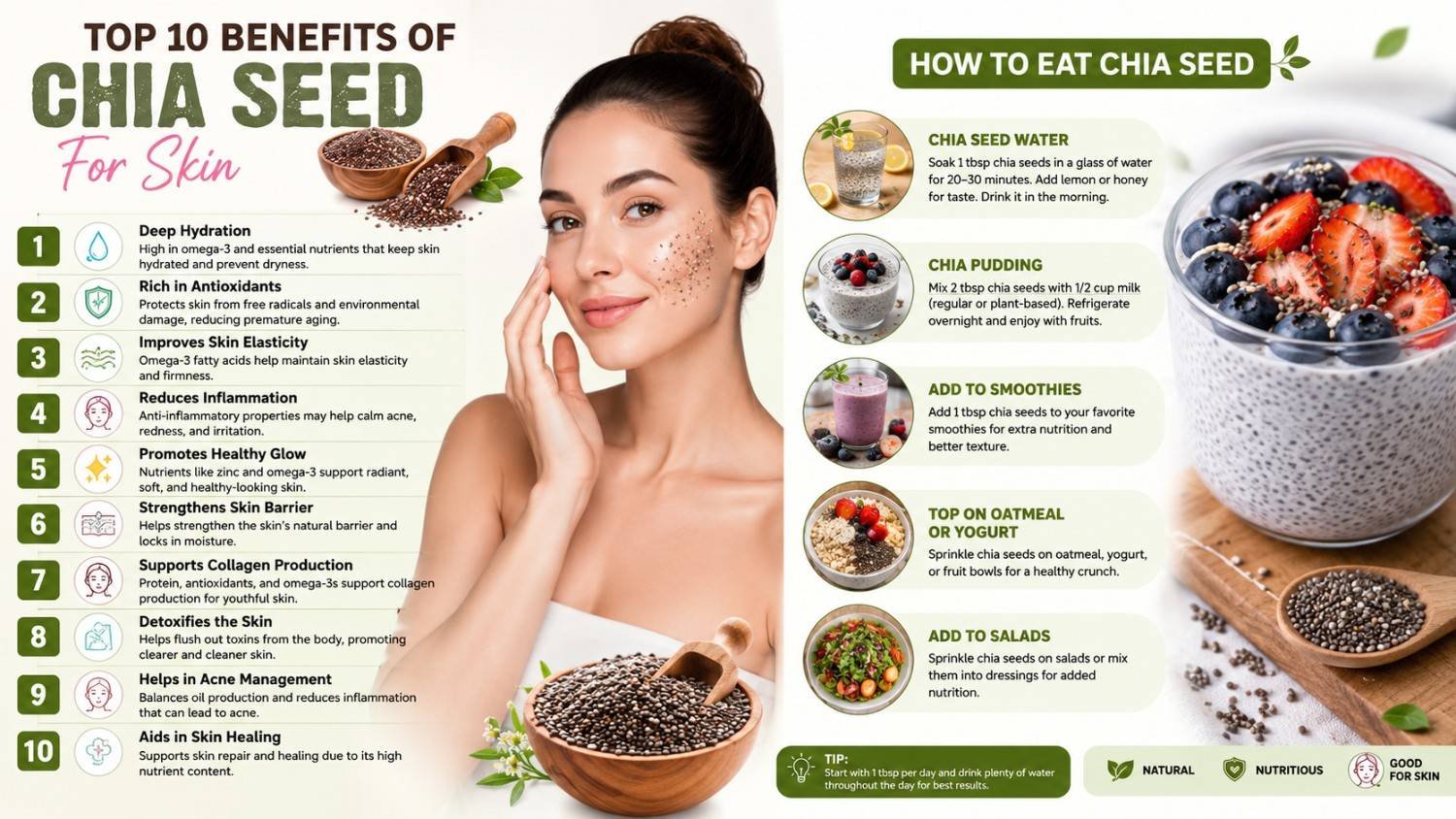
How to eat Chia seed | skin – benefits you should know
What are chia seeds?
Chia seeds are tiny black or white seeds derived from the Salvia plant, a member of the mint family native to Central America. These small seeds have been a part of human diets for over 5,000 years. Chia seeds were a staple food for the Aztecs and Mayans and learn how to eat chia seed
Nutritional Value of Chia Seeds for Skin
Chia seeds are packed with nutrients that can support overall skin health. They contain omega-3 fatty acids, fiber, protein, antioxidants, vitamins and minerals, which may help maintain healthy and hydrated skin.
Key nutrients in chia seed
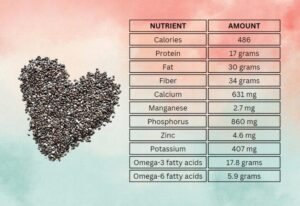
| Nutrient | Potential benefit for skin |
| Omega-3 fatty acids | May support the skin barrier and help maintain skin hydration |
| Antioxidants | Help protect cells from oxidative stress |
| Protein | Supports the body’s normal tissue repair processes |
| Fiber | Supports digestive health, which is important for overall wellness |
| Zinc | Supports normal skin maintenance and healing |
| Magnesium | Involved in many processes that support overall health |
| Calcium | Supports normal cellular functions |
Top 10 Benefits of Chia Seeds for Skin
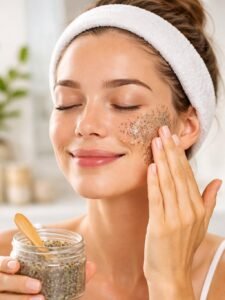
1 . Helps Keep Skin Hydrated
Chia seeds are rich in healthy fats and can contribute to overall hydration when included in a balanced diet.
2. Supports Skin Elasticity
Chia seeds provide omega-3 fatty acids, protein and minerals that support normal skin structure
3. Promotes Healthy, Glowing Skin
The combination of antioxidants, healthy fats, protein and minerals in chia seeds can help provide nutritional support for healthy-looking skin.
4. May Help Reduce Skin Inflammation
Chia seeds contain alpha-linolenic acid (ALA), a plant-based omega-3 fatty acid. Omega-3 fatty acids are associated with supporting a healthy inflammatory response.
5. Provides Antioxidant Protection
Chia seeds contain antioxidant compounds that help protect cells from oxidative stress caused by free radicals.
6. Supports the Skin’s Natural Repair Process
Chia seeds contain protein, zinc and other nutrients that contribute to normal tissue maintenance and repair.
7. Helps Maintain the Skin Barrier
The healthy fats found in chia seeds may support the skin’s natural protective barrier.
8. May Support Healthy Skin Aging
Antioxidants and omega-3 fatty acids in chia seeds may help protect skin cells from oxidative stress.
9. Supports Overall Skin Nourishment
Chia seeds provide several nutrients, including calcium, magnesium, phosphorus, zinc, protein and healthy fats.
10. May Help Maintain Smooth, Healthy- Looking Skin
Regularly eating nutrient-dense foods such as chia seeds can contribute to a balanced diet that supports skin health.
Chia seeds can support skin health as part of a balanced diet, but they are not a treatment for acne, eczema, pigmentation, wrinkles or other skin conditions.
How to eat Chia Seeds for Skin Health?
1. Eat Soaked Chia Seeds
One of the easiest way to learn how to eat chia seed is to Soak 1–2 tablespoons of chia seeds in water for about 15–30 minutes until they form a gel-like consistency.
2. Add Chia Seeds to Smoothies

If you are looking for an easy how to eat Chia seed option. Add a tablespoon of chia seeds to a fruit or vegetable smoothie. This is an easy way to include them regularly in your diet.
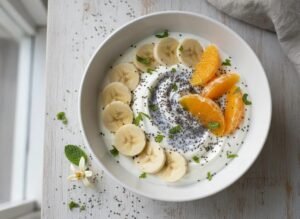
3. Mix Them Into Yogurt
You can eat chia seed by Sprinkle chia seeds over plain yogurt and add fruits such as berries, apples or bananas for a nutrient-rich snack.
4. Add Them to Oatmeal
Mix chia seeds into oatmeal or porridge. This provides healthy fats, fiber and protein along with your regular breakfast.
5. Make Chia Seed Pudding
Combine chia seeds with milk or a suitable plant-based milk and refrigerate until it develops a pudding-like consistency. Add fresh fruit for extra nutrients.
6. Add Them to Salads

Sprinkle a small amount of chia seeds over salads to increase the nutritional value of your meal. This is the easy to know how to eat chia seed.
7. Drinking Enough Water
Chia seeds absorb a significant amount of liquid because of their high fiber content. Stay adequately hydrated when increasing your chia seed intake.
How Much Chia Seeds Should You Eat?
For most adults, 1–2 tablespoons (about 15–30 g) per day is a practical amount to include in a balanced diet. If you are not used to eating much fiber, start with a smaller amount and increase gradually.
Possible Side Effects of Chia Seeds
Chia seeds are generally safe for most people when consumed in moderate amounts. However, eating too many at once or consuming them without enough fluid may cause digestive discomfort.
1. Bloating and Gas
Chia seeds are high in fiber. A sudden increase in fiber intake may cause bloating, gas or abdominal discomfort, especially in people who are not accustomed to high-fiber foods.
2. Constipation or Digestive Discomfort
Although fiber can support regular bowel movements, eating a large amount of chia seeds without drinking enough water may cause constipation or digestive discomfort.
3. Diarrhea
Consuming excessive amounts of fiber can sometimes lead to loose stools or diarrhea, particularly if your body is not used to it.
4. Allergic Reactions
Some people may be allergic to chia seeds. Possible symptoms include itching, rash, swelling or difficulty breathing. Seek urgent medical attention if severe allergic symptoms occur.
5. Choking Risk
Dry chia seeds absorb liquid and expand. Eating large amounts of dry chia seeds may create a choking risk, particularly for people who have difficulty swallowing. Consider soaking them or consuming them with sufficient liquid.
6. Possible Blood Sugar Effects
Chia seeds are high in fiber and may influence blood sugar levels. People taking diabetes medication should monitor their blood sugar and discuss significant dietary changes with their healthcare professional.
7. Possible Blood Pressure Effects
Chia seeds may have a modest effect on blood pressure. If you take blood-pressure-lowering medication, speak with your healthcare professional before making major changes to your chia seed intake.
How to avoid side effects
- Start with a small amount if you are new to chia seeds.
- Increase your intake gradually.
- Drink enough water throughout the day.
- Avoid swallowing large amounts of dry chia seeds.
- Stop eating them if you experience an allergic reaction.
Read also:
Best Foods for Nail Growth: Top 5 Summer Picks
Daily Summer Skin Care Routine in Hindi
Summer Acne Tips: Don’t Let Breakouts Ruin Your Glow
Conclusion
Are Chia Seeds Good for Skin?
Now you know how to eat chia seed you can choose which fits in your routine. Yes, chia seeds can be a healthy addition to your diet for supporting overall skin health. They are rich in omega-3 fatty acids, antioxidants, protein, fiber and essential minerals that may help support skin hydration, the skin barrier, elasticity and healthy aging.

Tanisha Gupta is a dedicated NEET aspirant with a strong interest in health, wellness, nutrition, and fitness. Her journey as a medical aspirant inspires to learn more about healthy living and share useful, simple, and practical health information. She believe that good health is the foundation of a better life, and through her content, She aim to spread awareness and encourage healthier lifestyle choices.