
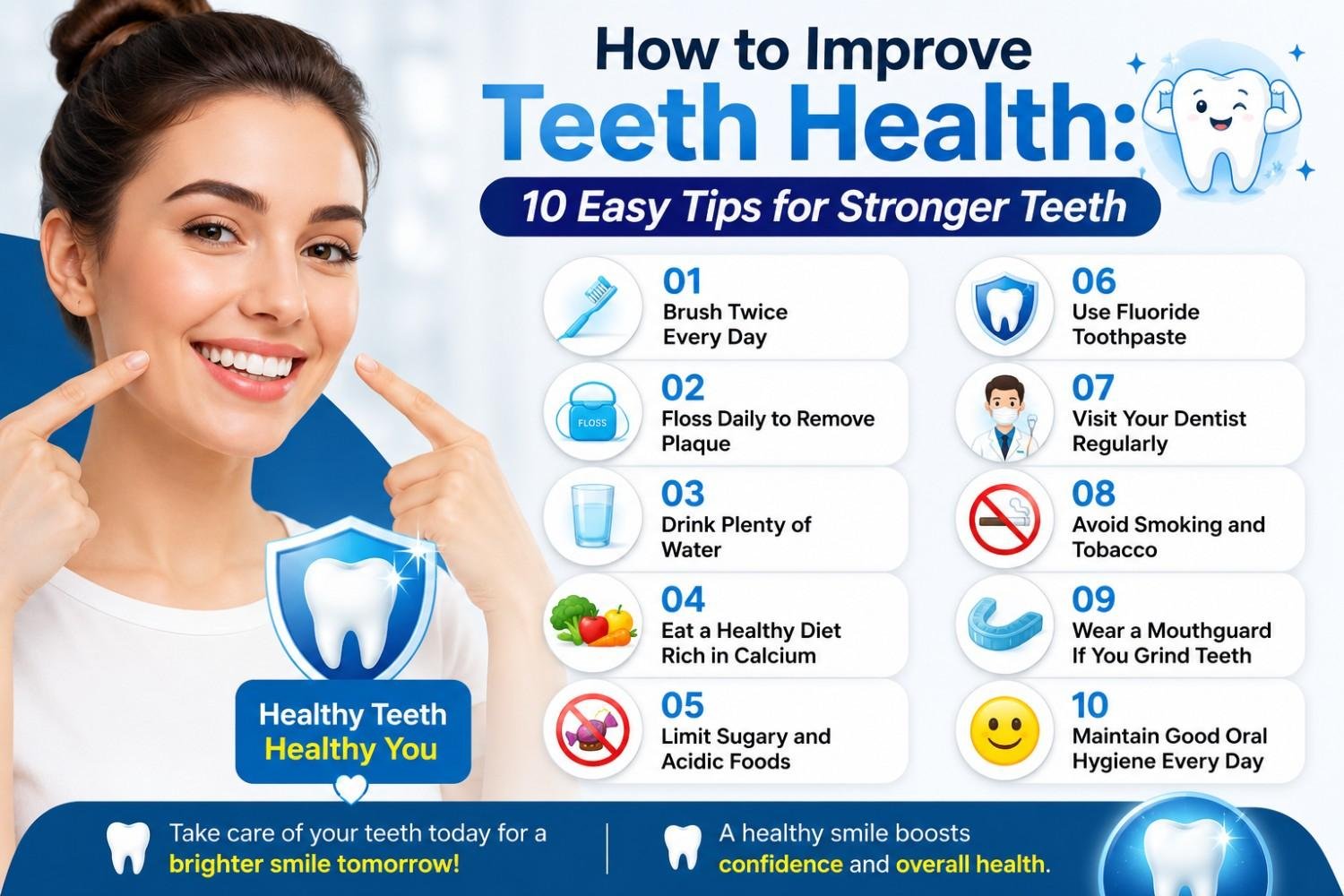
How to Improve Teeth Health: A Complete Guide
Good teeth health is an important part of your overall health. Healthy teeth and gums can help you eat comfortably, speak clearly, and maintain a confident smile.
The good news is that improving your oral health does not require complicated steps. Simple daily habits, a healthy diet, and regular dental care can make a big difference.
Why is Good Teeth Health Important?
Healthy teeth do much more than give you a bright smile. They help you chew food, speak clearly, and support your facial structure. Good oral care also helps protect you from common problems like cavities, gum disease, tooth decay, and tooth loss.
Poor oral hygiene can allow plaque and harmful bacteria to build up around your teeth and gums. Regular cleaning helps reduce this buildup and supports better oral health.
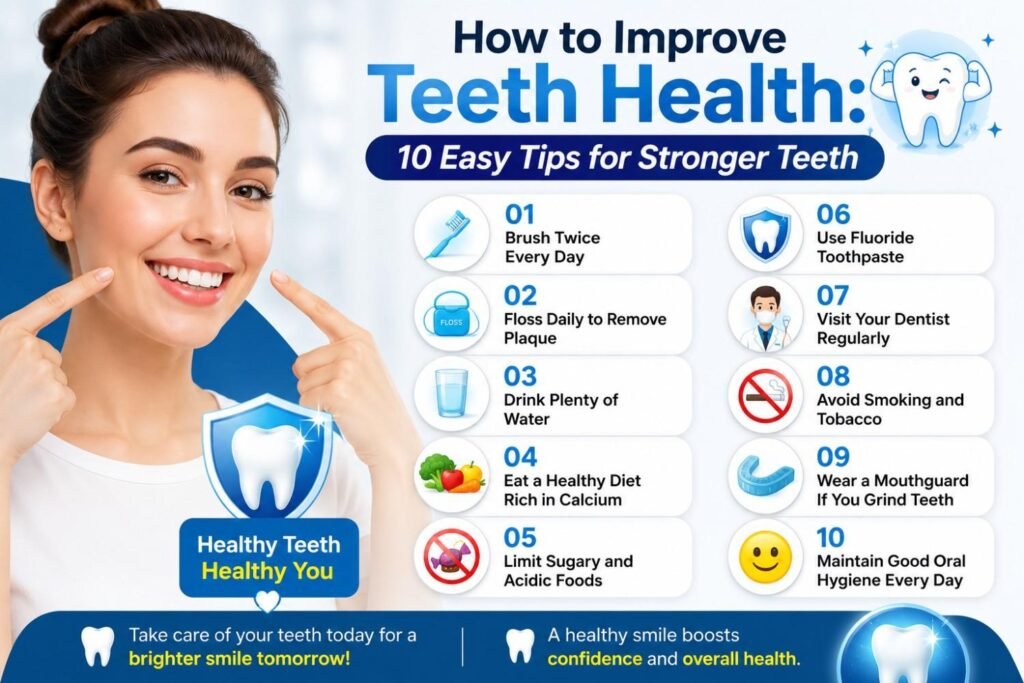
10 Easy Ways how to Improve Teeth Health
1. Brush Your Teeth Twice a Day
Brush your teeth twice a day for about two minutes each time. Use a soft-bristled toothbrush and clean all surfaces of your teeth gently.
Regular brushing helps remove plaque, food particles, and bacteria that can contribute to tooth decay and gum problems.
2. Use Fluoride Toothpaste
Choose a toothpaste that contains fluoride. Fluoride helps strengthen tooth enamel and can help protect your teeth from cavities.
Use a small amount of toothpaste and brush gently rather than applying too much pressure.
| Toothpaste | Fluoride | Best For |
| Colgate Strong Teeth | Fluoride | Daily cavity protection |
| Colgate Total | Fluoride | Overall teeth & gum care |
| Pepsodent Germicheck | Fluoride | Everyday cavity protection |
| Sensodyne Fresh Mint | Fluoride | Sensitive teeth |
| Sensodyne Repair & Protect | Fluoride | Tooth sensitivity |
| Closeup Ever Fresh | Fluoride | Daily oral hygiene |
3. Clean Between Your Teeth Daily
A toothbrush cannot clean every area between your teeth. Floss or use an interdental cleaner once a day to remove food and plaque from these spaces.
Cleaning between your teeth can help support healthy gums and reduce the risk of cavities between teeth.
4. Clean Your Tongue
Your tongue can collect bacteria and food particles, which may contribute to bad breath. Gently cleaning your tongue can be a useful part of your daily oral hygiene routine.
You can use your toothbrush or a tongue cleaner to clean the surface of your tongue.
5. Eat Foods That Support Healthy Teeth
A balanced diet can support strong teeth and healthy gums. Include nutritious foods such as vegetables, fruits, dairy products, and other calcium-rich foods.
Drinking water and choosing nutritious snacks can also be better for your teeth than frequently eating sugary foods.
| Food | Key Nutrients | Benefits for Teeth Health |
| Milk | Calcium, Phosphorus, Vitamin D | Helps strengthen tooth enamel and bones |
| Yogurt | Calcium, Protein, Probiotics | Supports strong teeth and healthy gums |
| Cheese | Calcium, Phosphorus, Protein | Helps protect tooth enamel and supports mineral balance |
| Leafy Greens | Calcium, Vitamin K, Folate | Supports healthy gums and strong teeth |
| Almonds | Calcium, Magnesium, Protein | Provides minerals that support tooth and bone health |
| Eggs | Protein, Phosphorus, Vitamin D | Supports strong teeth and enamel |
| Fatty Fish | Vitamin D, Phosphorus, Omega-3 | Helps the body use calcium effectively |
| Carrots | Fiber, Vitamin A | Supports healthy gums and saliva production |
| Apples | Fiber, Water, Vitamin C | Helps stimulate saliva and makes a healthy snack |
| Celery | Water, Fiber, Vitamin K | Supports saliva flow and gum health |
| Sesame Seeds | Calcium, Magnesium, Phosphorus | Provides minerals important for strong teeth |
| Broccoli | Calcium, Vitamin C, Vitamin K | Supports healthy gums and tooth structure |
6. Limit Sugar and Sugary Drinks
Frequent consumption of sugar and sugary drinks can increase the risk of tooth decay. Bacteria in dental plaque use sugars to produce acids that can damage tooth enamel.
Try to limit sugary snacks, soft drinks, and sweetened beverages, especially between meals.
7. Drink Plenty of Water
Water helps keep your mouth hydrated and can help wash away food particles. Drinking water instead of sugary beverages is also a simple way to reduce sugar exposure.
If your local drinking water contains fluoride, it may also provide additional protection against cavities.
8. Avoid Smoking and Tobacco
Smoking and tobacco use can negatively affect oral health and increase the risk of gum disease and other dental problems.
Avoiding tobacco is an important step toward maintaining healthy teeth and gums and protecting your overall health.
9. Use Mouthwash When Appropriate
An appropriate mouthwash can be an additional part of an oral hygiene routine. However, it should not replace brushing and cleaning between your teeth.
If you have specific dental concerns, ask your dentist which type of mouthwash is suitable for you.
10. Visit Your Dentist Regularly
Regular dental checkups can help identify cavities, gum problems, and other oral health issues early. Your dentist can also recommend care based on your individual needs.
Do not wait until you have severe tooth pain before seeking dental care.