
Lack of Blood in Women: 7 Proven & amp; Easy Ways to Fix Anaemia
Introduction: Understanding Lack of Blood in Women and Chronic Fatigue
The issue of lack of blood in women (anaemia) has become an extremely common yet serious health concern today. Do you wake up with high energy in the morning, only to feel drained and exhausted by 10 AM? By noon, does both your body and mind feel overwhelmed by sluggishness?
Most women ignore these early signs, assuming it is just routine daily fatigue. However, ignoring this can lead to severe health issues. Anemia occurs when your blood lacks enough healthy Red Blood Cells (RBCs) or hemoglobin. Without sufficient hemoglobin, your blood cannot deliver adequate oxygen to your organs, leaving you tired all day. While women spend time caring for everyone around them, it is essential not to overlook these vital warning signals from your own body.
Current Data: The Reality of Anaemia in Women and Teenage Girls
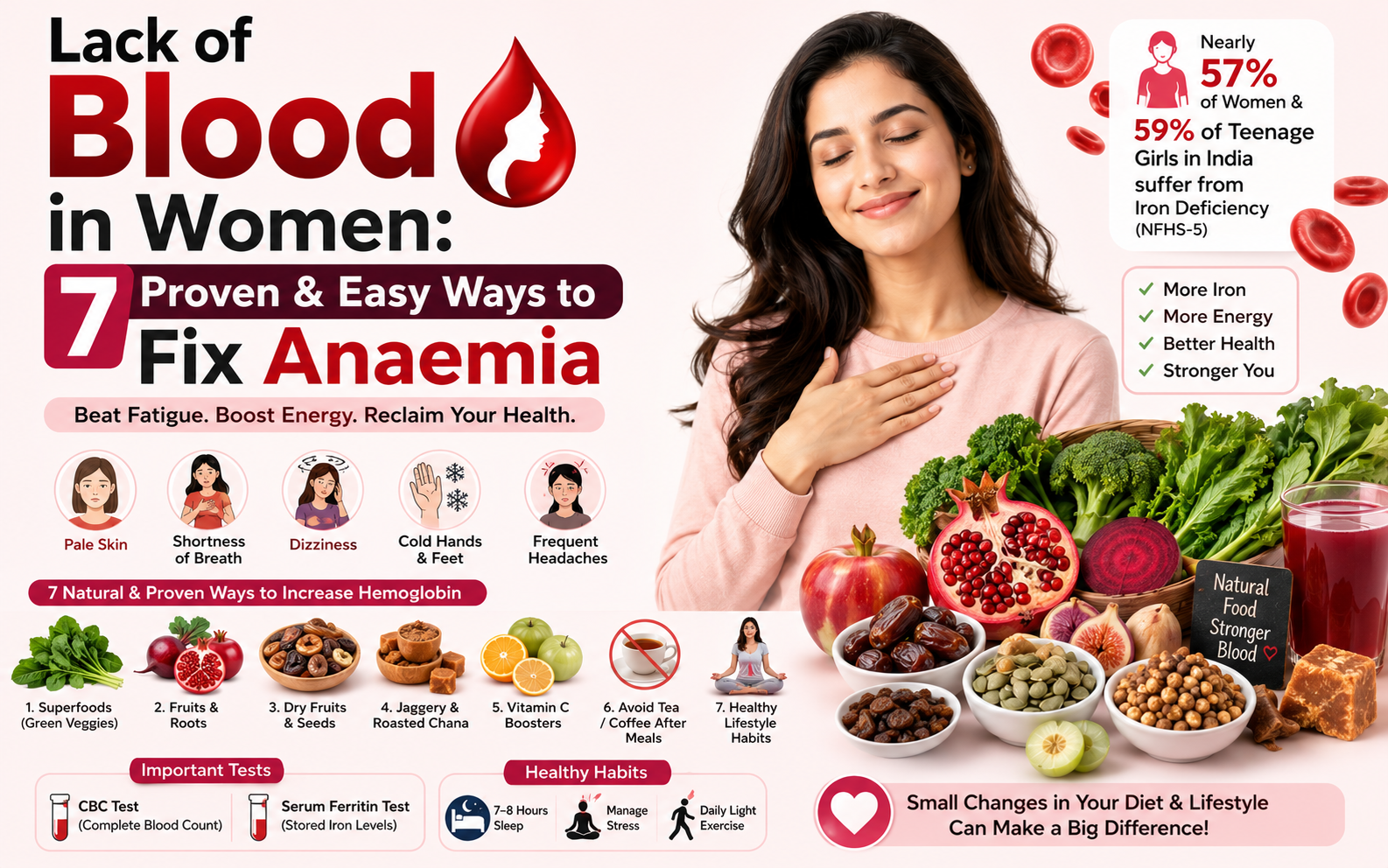
“Did you know that severe anemia in women is growing rapidly in India? According to official data from the National Family Health Survey (NFHS-5), nearly 57% of women and 59% of teenage girls suffer from iron deficiency…”
During adolescence, as a girl’s body grows rapidly and menstruation begins, the body requires extra iron. However, poor dietary choices and fast-food consumption cause hemoglobin levels to drop significantly. This is why school and college girls frequently experience dizziness and weakness during their daily routines. Furthermore, women often eat last at home, leaving their meals deficient in essential nutrition. We can only change this reality when we prioritize women’s health as a serious medical issue.
5 Main Low Hemoglobin Symptoms of Lack of Blood in Women
When there is a lack of blood in women, the body gives several subtle warnings before symptoms worsen:
- Pale Skin: A yellowish tint on the face, under-eyes, and nails is a primary early sign.
- Shortness of Breath: Feeling breathless even after light daily chores.
- Dizziness: Feeling lightheaded or seeing dark spots after standing up or doing minimal physical work.
- Cold Hands & Feet: Poor oxygen supply and poor blood circulation cause icy extremities.
- Frequent Headaches: Unexplained, persistent headaches due to reduced oxygen delivery to the brain.
5 Primary Causes of Lack of Blood in Women and Fatigue
Understanding why lack of blood in women occurs is key to preventing long-term damage:
Iron Deficiency: The most common cause. Without sufficient dietary iron, the body cannot produce adequate Red Blood Cells (RBCs).
Heavy Menstrual Bleeding: Excessive blood loss during monthly periods drops haemoglobin levels rapidly if not compensated through diet.
Pregnancy & Lactation: Expectant and nursing mothers require double the iron to support baby growth. Lack of proper care leads to severe gestational anemia.
Nutritional Deficiencies: Lack of Vitamin B12 and Folic Acid prevents the formation of healthy red blood cells.
Hormonal Imbalance (Thyroid): Hypothyroidism slows down metabolism, leading to constant weakness and fatigue.
Superfoods (Green Vegetables): Spinach, Fenugreek, Broccoli, and Mustard Greens
Spinach and Fenugreek (Natural Iron Boosters)
When treating lack of blood in women, leafy greens like spinach and fenugreek are your best kitchen allies. Packed with high iron and folic acid content, they help synthesize new blood cells quickly.
Broccoli and Mustard Greens (Energy and Strength Combo)
Broccoli and mustard greens contain high-quality iron along with Vitamin C and Vitamin A, which naturally enhance the body’s iron absorption capacity.
💡 Cooking Tip: Avoid overcooking green vegetables to preserve their heat-sensitive vitamins and minerals. Include green superfoods in your meals 3–4 times a week.
Fruits and Roots: Beetroot, Pomegranate, and Apple for Fast Recovery
Beetroot: Rich in iron, potassium, and folic acid, beetroot acts as a natural blood producer that boosts hemoglobin fast.
Pomegranate: Loaded with iron, Vitamin C, A, and E, pomegranate seeds raise RBC counts and offer instant energy.
Apple: High in iron and antioxidants, apples strengthen the blood formation process.
Dry Fruits and Seeds: Raisins, Dates, Figs, and Pumpkin Seeds
Soaked Raisins and Figs: Soaking raisins (Munakka) and dried figs overnight doubles their iron bioavailability.
Dates: Eating 2–3 dates daily supplies natural sugars, iron, and Vitamin C to fight persistent tiredness.
Pumpkin Seeds: A nutritional powerhouse packed with magnesium and iron; enjoy them roasted as an evening snack.
Traditional Remedy: Jaggery and Roasted Chana Combo
The traditional Indian pairing of jaggery (gud) and roasted chana remains one of the most affordable and effective solutions for lack of blood in women.
Jaggery provides unrefined natural iron, while chana provides high plant protein.
Swap refined junk food with a handful of unpeeled roasted chana and jaggery during evening tea time.
This combination boosts energy instantly and supports digestive health.
The Role of Vitamin C: Amla, Oranges, and Lemons
Regardless of how much iron-rich food you consume, your body cannot absorb non-heme iron efficiently without Vitamin C.
Natural Sources: Amla (Indian Gooseberry), oranges, and lemons are loaded with Vitamin C.
Daily Practice: Drink amla juice in the morning or squeeze fresh lemon juice over your lentil soups and vegetables. Taking Vitamin C alongside iron intake maximizes iron absorption in the gut.
Diet Mistakes to Avoid
Avoid Drinking Tea or Coffee Immediately After Meals
Drinking hot tea or coffee right after meals is a common habit, but tea and coffee contain chemical compounds called Tannins and Polyphenols. These compounds bind to dietary iron, preventing your intestines from absorbing it properly.
💡 Fix: Maintain a gap of at least 1 hour before or after meals before consuming tea or coffee. Drink warm water or fennel (saunf) tea for digestion instead.
Healthy Lifestyle Habits: Sleep, Stress Management, and Exercise
7–8 Hours of Quality Sleep: Deep sleep allows your body to repair tissue damage and accelerate red blood cell production.
Stress Reduction: High stress raises cortisol levels, draining your physical energy. Dedicate 5–10 minutes daily to deep breathing or meditation.
Daily Light Exercise: Engaging in a 20-minute daily walk or light yoga improves blood circulation and oxygenation throughout the body.
Medical Tests & Doctor Consultation: CBC and Serum Ferritin Tests
If weakness and dizziness persist, timely diagnostic testing is critical:
CBC Test (Complete Blood Count): Measures your exact haemoglobin (Hb) concentration and red blood cell (RBC) count.
Serum Ferritin Test: Measures stored iron levels in your liver and tissues to check long-term reserves.
Doctor Consultation: If low energy levels persist despite diet changes, consult a medical practitioner or gynaecologist for targeted iron supplementation.“For more wellness advice and updates, you can explore our Health Category section.”
Conclusion
Overcoming a lack of blood in women (anaemia) is completely manageable with timely awareness and care. By incorporating iron-rich superfoods, pairing them with vitamin C, avoiding post-meal tea/coffee, and maintaining clean lifestyle habits, you can sustain healthy haemoglobin levels without relying solely on expensive treatments.
Take charge of your health today—start making small, nutritious choices to live an active, disease-free life!

Kashish is a content writer and digital publisher with 2+ years of experience in creating SEO-friendly, research-based content. Specializing in health, technology, education, and informative topics, Kashish is dedicated to delivering accurate, easy-to-understand, and reader-focused articles. Every piece of content is developed through reliable research and follows SEO best practices to provide trustworthy and valuable information.